
Measuring What Matters: Health, Resilience, and the Future of Cocoa
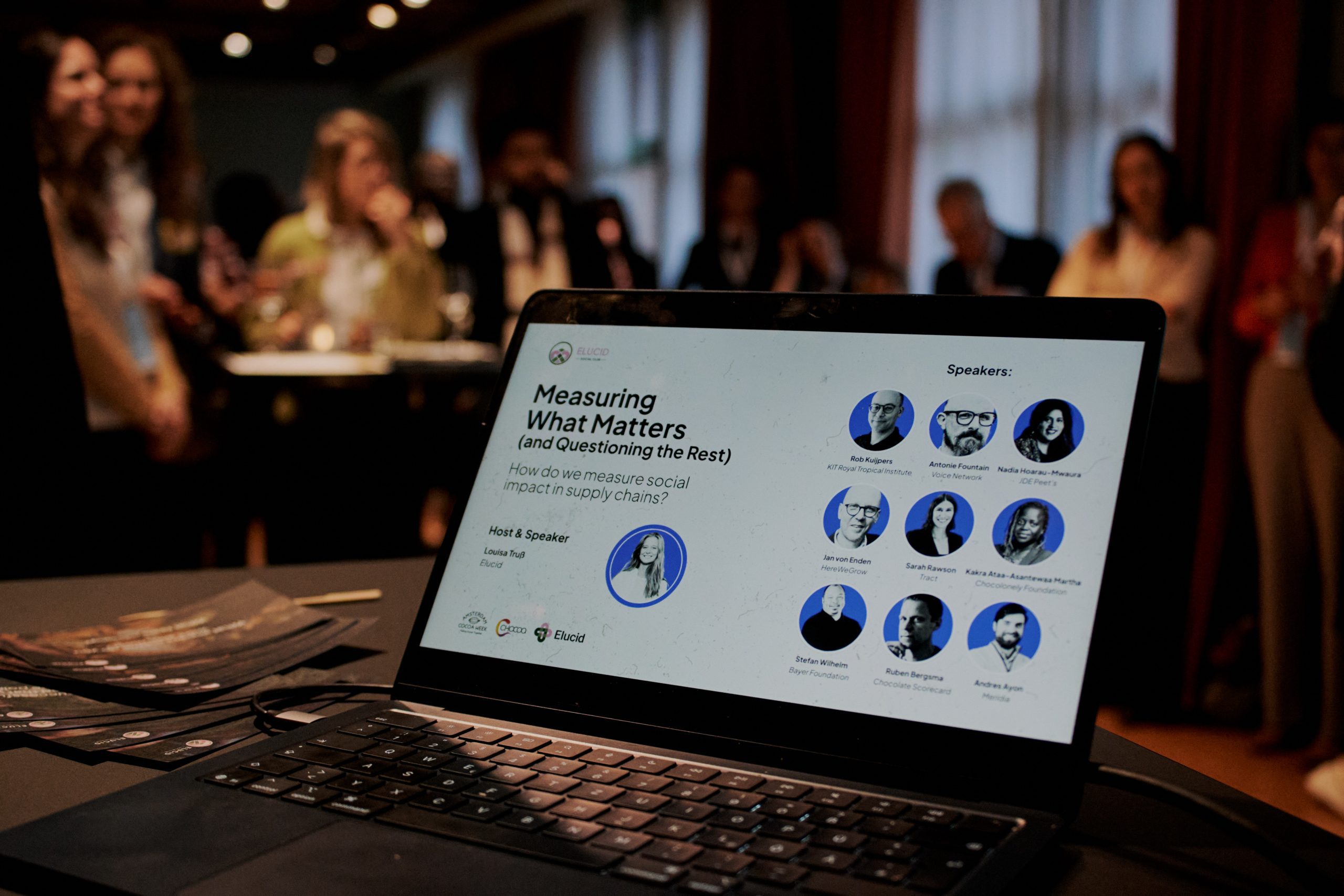
Reflections from the Third Elucid Social Club | Amsterdam Cocoa Week 2026
At Amsterdam Cocoa Week, one question kept resurfacing across panels, side conversations, and strategy sessions: What does the future of cocoa actually depend on?
The timing could not have been more relevant.
Just days before the event, KIT Royal Tropical Institute published its Learning Brief on farmer health as a driver of cocoa supply chain resilience, reinforcing that health is not a peripheral “social” topic but foundational for a future-proof sector, resonating with the broader theme of Amsterdam Cocoa Week 2026 – #creatingimpacttogether and making the chocolate sector “future proof”.
This surfaced in two connected conversations: our Elucid Social Club meeting about impact measurement, and the panel on “Risk Mitigation Strategies, Retention & Procurement“, where Louisa Truß (our Head of Partnerships) joined to explore how a health-centred approach can strengthen supply chain resilience.
Across the week, these conversations played out within the broader context of current challenges facing the cocoa sector: sharp price swings, rapid market corrections, and shifting origin-country policies redefining how risk is understood and managed. At the same time, traceability and deforestation regulations are becoming a basic requirement to operate, and discussions repeatedly returned to how productivity, climate resilience, and farmer income must be tackled in conjunction.
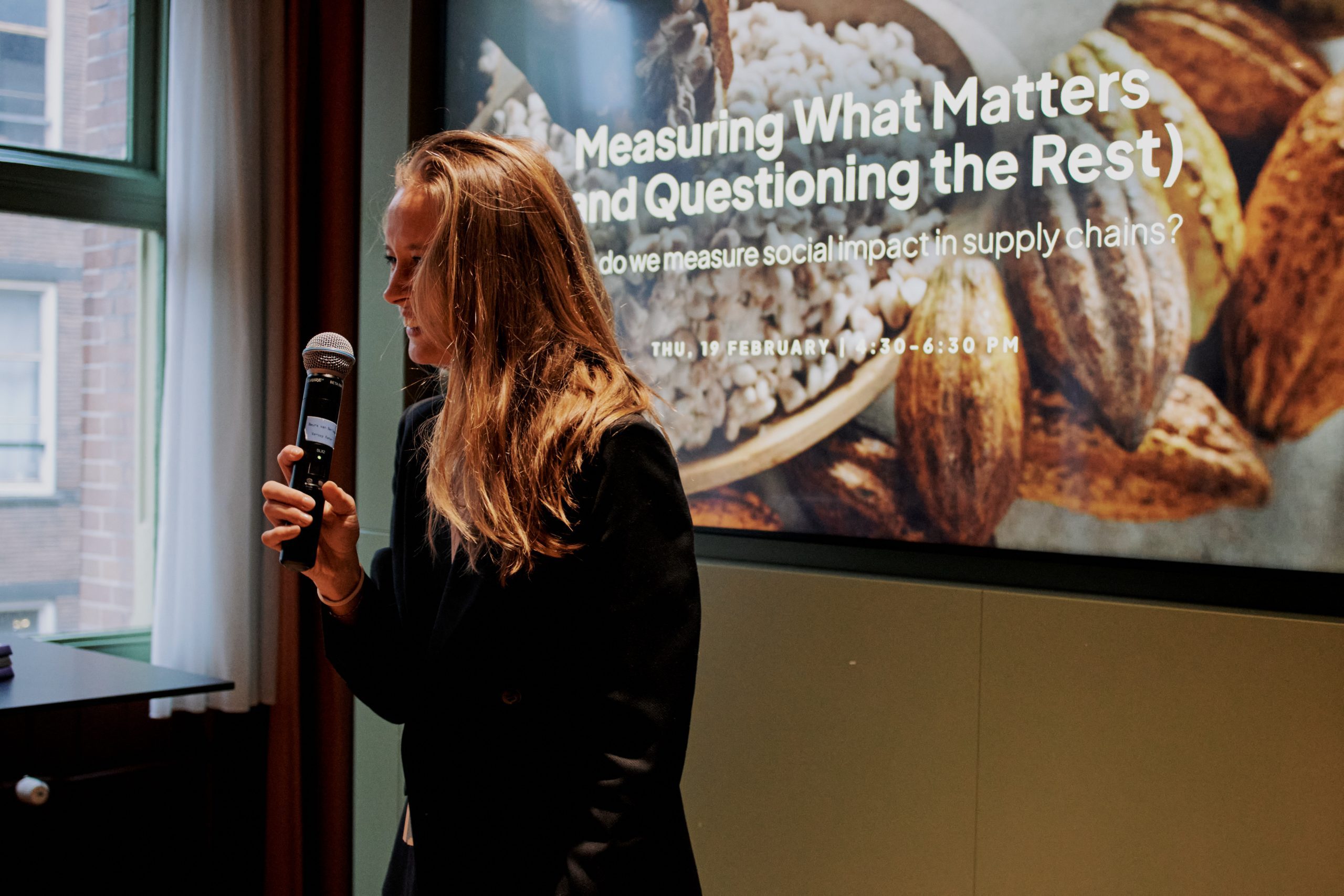
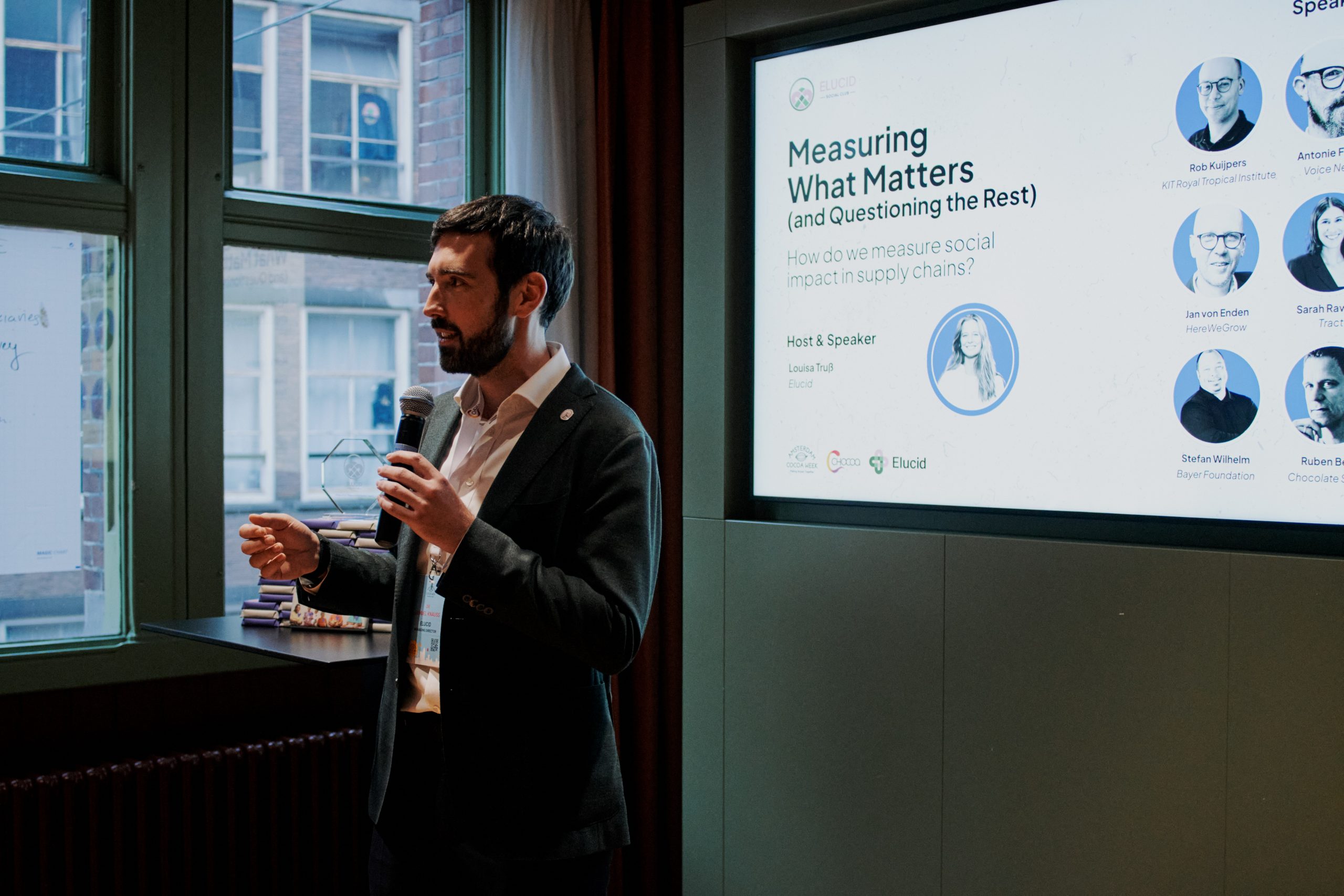
The third Elucid Social Club “Measuring What Matters (and Questioning the Rest)” was designed as a focused space to dig deeper into one core idea threading through the week:
Are we measuring what truly strengthens farmer households and supply chains or only what is easiest to measure?
Bringing together sustainability leaders, cooperatives, investors, foundations, researchers, and data specialists from across sectors, the Social Club became a moment to connect the week’s big-picture concerns about volatility, regulation, and future-proofing with the practical challenge behind this question.

From Metrics to Meaning
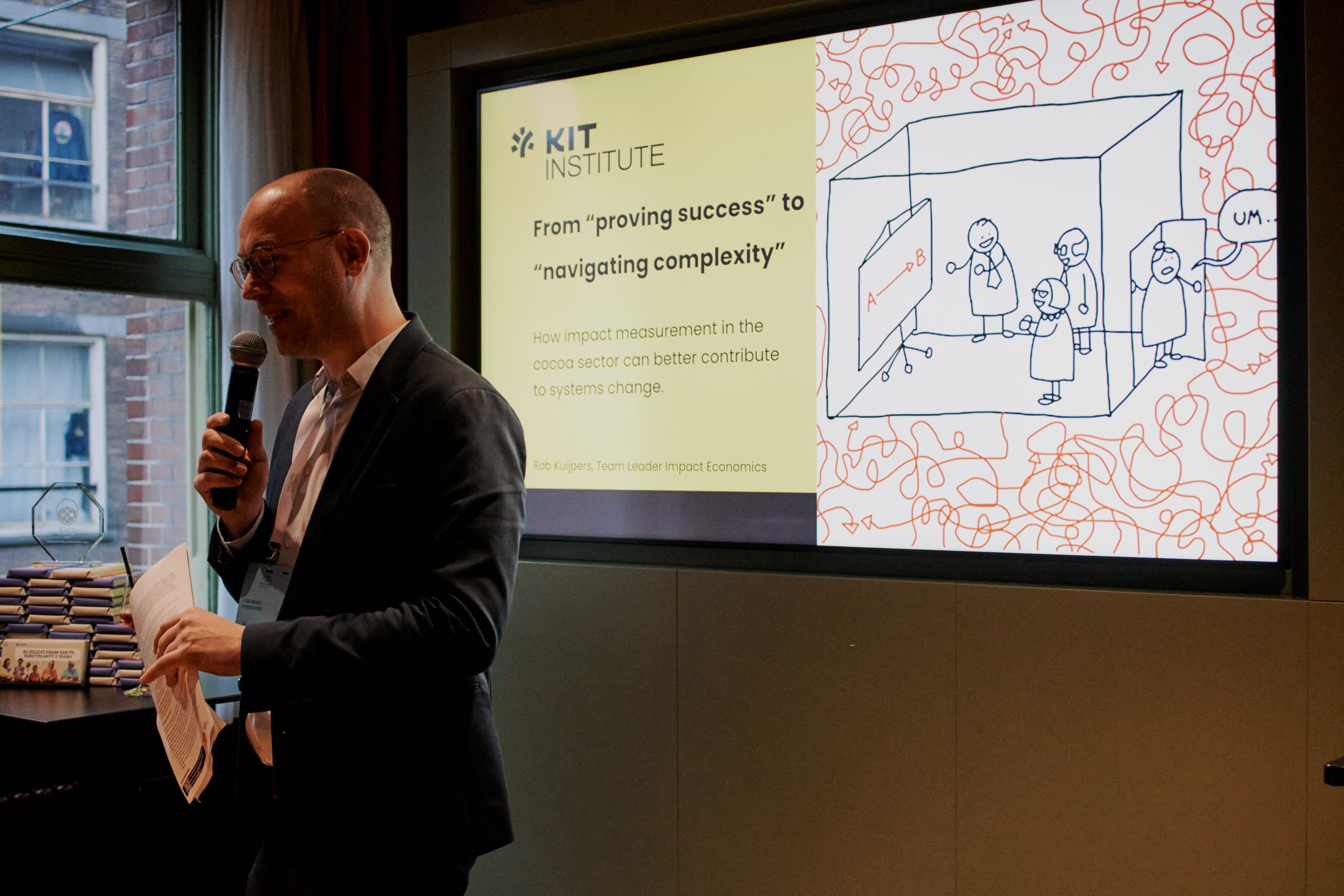
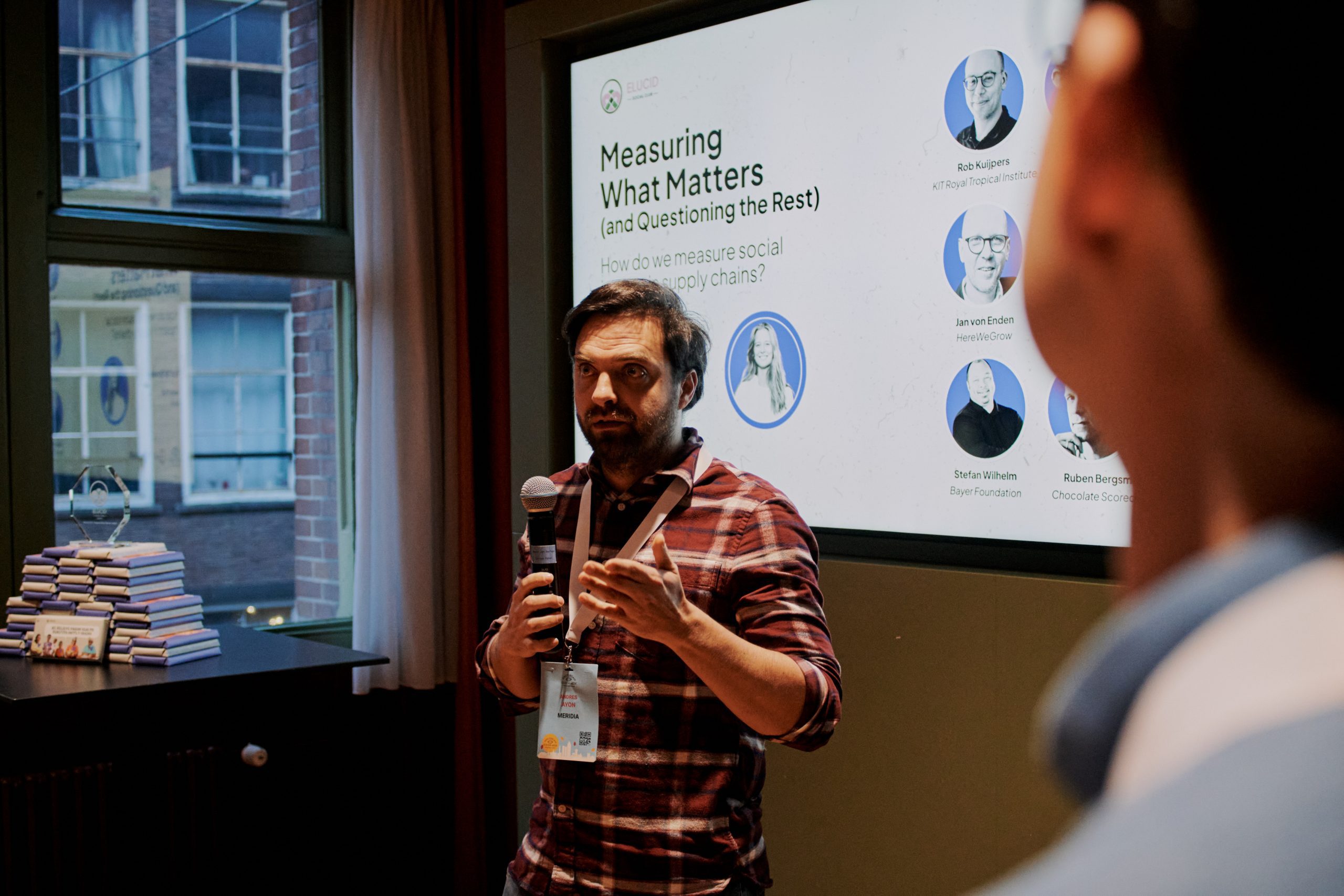
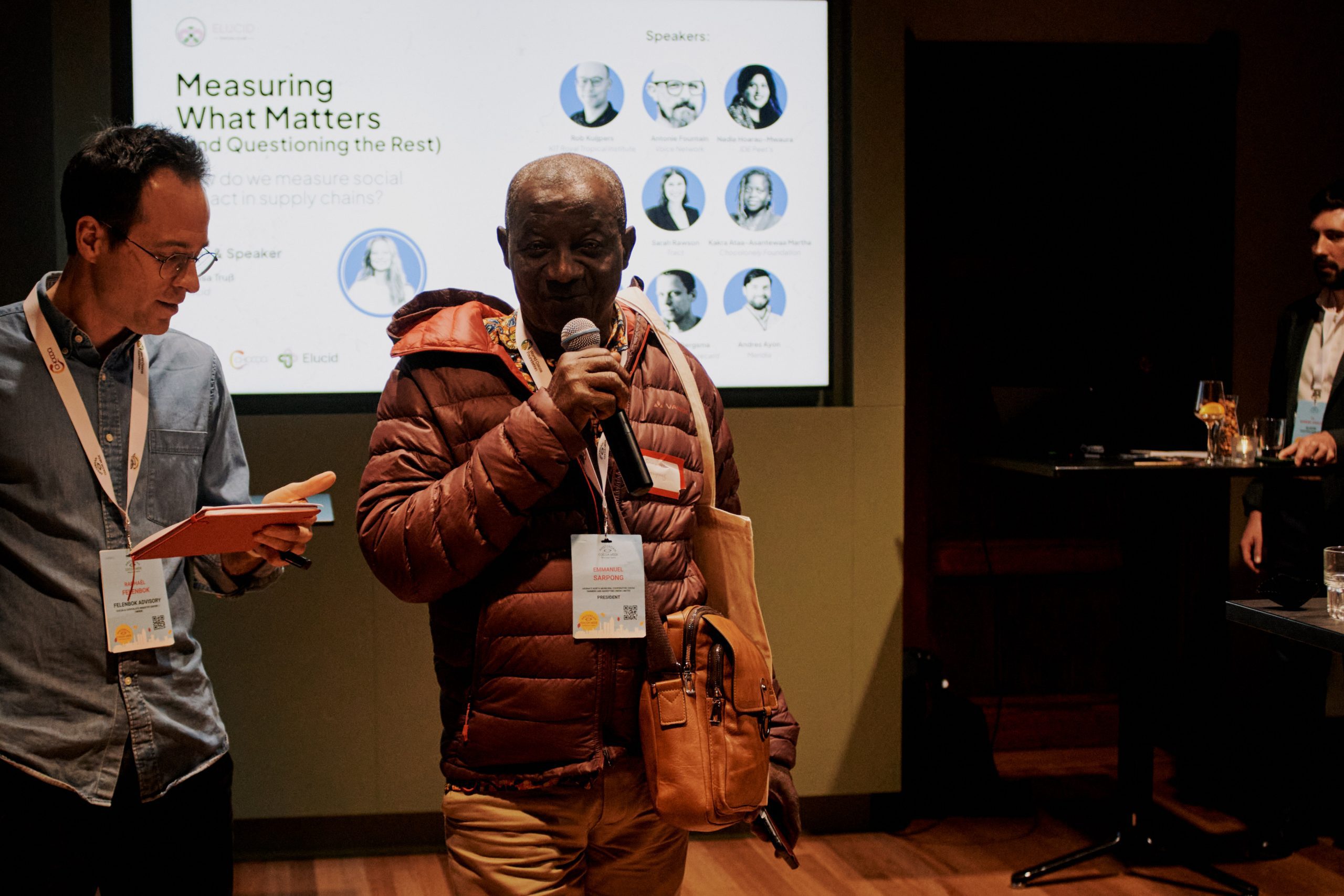
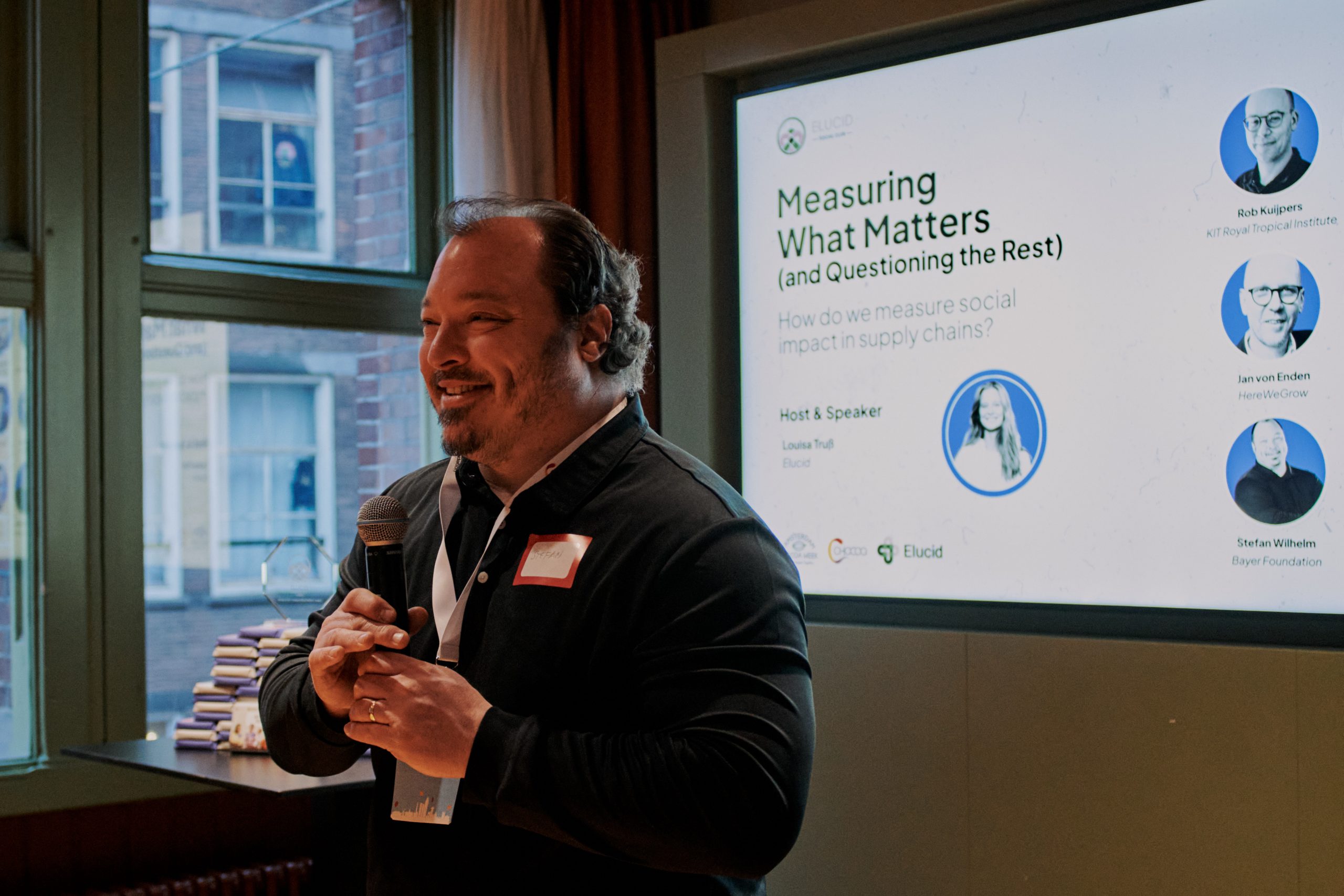
The evening began with a rapid series of provocations from an exceptional group of speakers who provided insights into the highs and lows of impact measurement. Speakers included Antonie C. Fountain (VOICE Network), Ruben Bergsma (Chocolate Scorecard), Sarah Rawson (TRACT), Kakra Ataa-Asantewaa Martha (Chocolonely Foundation Board), Andres Ayon (Meridia), Rob Kuijpers (KIT Royal Tropical Institute), Nadia Hoarau-Mwaura (JDE Peet’s), and Stefan Wilhelm (Bayer Foundation).
Across these perspectives, several tensions emerged:
- Auditability vs. long-term systemic change
- Standardization vs. farmer diversity
- Corporate ESG prioritization vs. actual impact on household resilience
- Policy commitments vs. verified outcomes
- Social return on investment vs. farmer realities
Kakra Ataa-Asantewaa Martha reminded us that the way data is collected shapes whose reality gets counted. Too often, data is gathered from the most accessible person, typically the farm owner, often the male head of household. That may be efficient, but it narrows the picture. When company metrics rely mainly on those voices, entire household perspectives disappear from what is later reported as “impact.”
From the corporate side, Nadia Hoarau-Mwaura pointed to another uncomfortable truth: we still lack a shared understanding of what “impact” actually means beyond outputs and outcomes. As long as definitions differ, alignment will remain difficult.
And then there is the bigger issue: data sitting in silos. As Antonie Fountain put it clearly, the challenge is often not the absence of data. Many companies already hold vast amounts of it. The problem is that it is not being shared, whether due to strategy, caution, or simply not knowing how. But data that stays locked away does not drive change. Collecting it is only step one. Without transparent and robust data-sharing systems, “measuring what matters” remains an incomplete exercise.
The Question Beneath All Metrics
As conversations unfolded, one central reality kept surfacing:
There is no future for cocoa, or any agricultural commodity, without farmers who can build a viable life around it.
Participants described farmer households not as reputational risks to be managed, but as long-term partners whose income stability, health, and education ultimately determine whether the next generation will choose to remain in farming.
There was a strong focus on this: resilience was consistently described not as a corporate objective, but as something that must be built at household level. Farming remains sustainable only if it provides stability, services, and prospects for the next generation.
We also reflected on:
- An aging farmer population
- Young people questioning whether cocoa offers a stable future
- Revenue volatility undermining long-term planning
- Health shocks quickly eroding income gains
Closely linked to this was the role of data systems. If resilience is to be built at the household level, then the data architecture around it matters. Data systems should serve producers, not add yet another layer of reporting pressure. When data is clear, relevant, and embedded within producer organizations, it can strengthen compliance processes, improve market positioning, and support better-designed incentives.
But as Nadia highlighted, this only works if we are aligned on what “impact” actually means. Without a shared understanding, and when we default to short-term or output-focused metrics, we risk designing systems that satisfy reporting requirements while failing to show whether farmers’ lives are truly becoming more resilient.

Health as Resilience Infrastructure
While the evening was focused on impact measurement, health, as always for us here at Elucid, nonetheless featured prominently in the discussion. So what do the aforementioned discussions and conversations mean for health?
Cooperative leaders emphasised the links between education, healthcare access, and productivity, which are foundational to the future of cocoa and the stability of supply chains. We see a gradual shift in framing: health is not to be viewed as an individual burden, rather as a structural factor to supply chain stability.
Several participants also noted that if resilience is the goal, health considerations need to be embedded into living income models, data systems, and long-term planning.
Regulation and broader system change were also recognized as critical. Standards can improve practices and reduce harm, but only if they are inclusive, economically viable, and supported by business models, financing structures, and public–private collaboration that make farming profitable over the long term.
Designing Under Constraints
To move from discussion to application, participants also took part in a table exercise. The scenario was “simple”: design a three-year Resilience Program.
We asked to reflect on two critical questions:
- What unintended consequence could this metric encourage?
- Which stakeholder might be implicitly deprioritised?
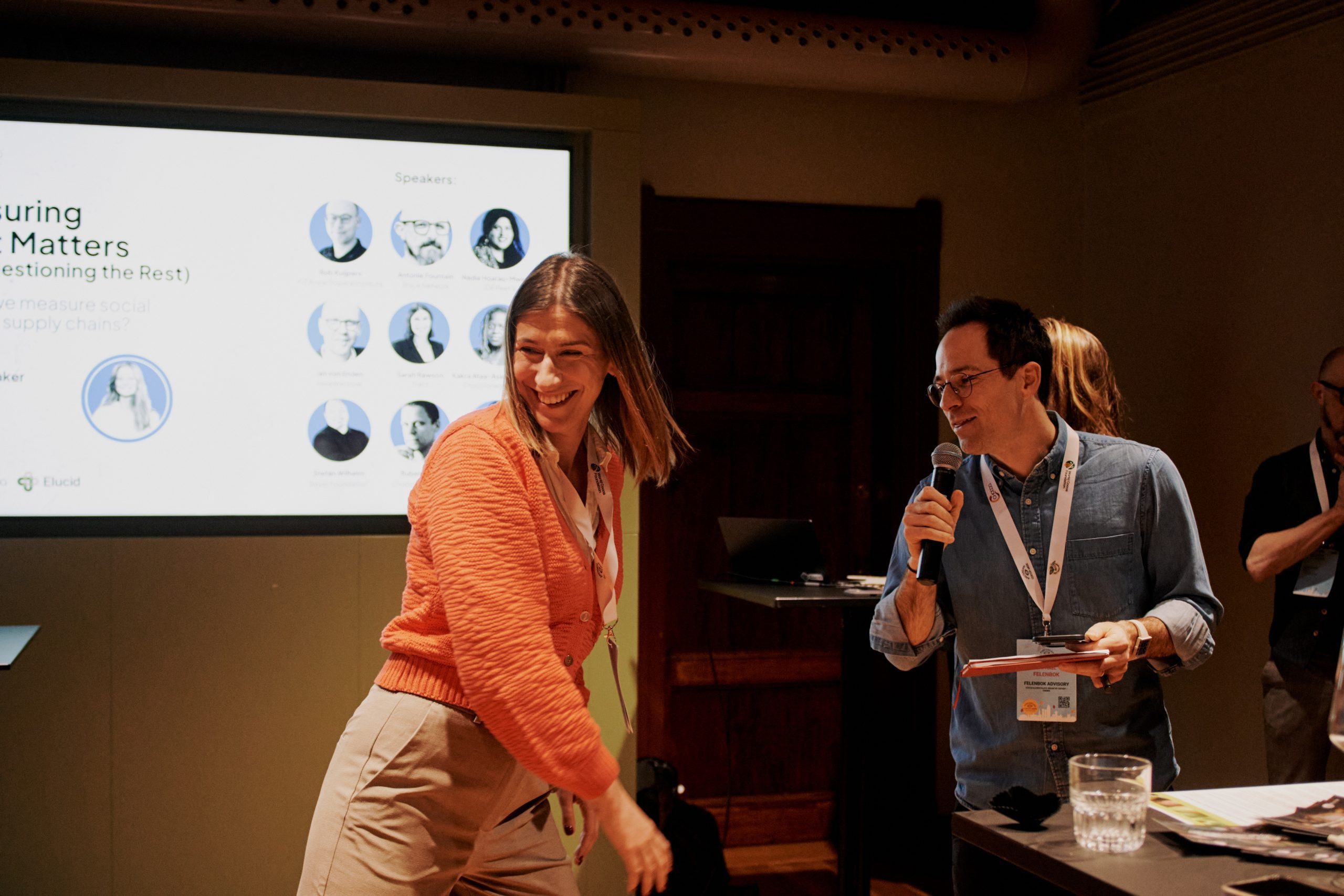
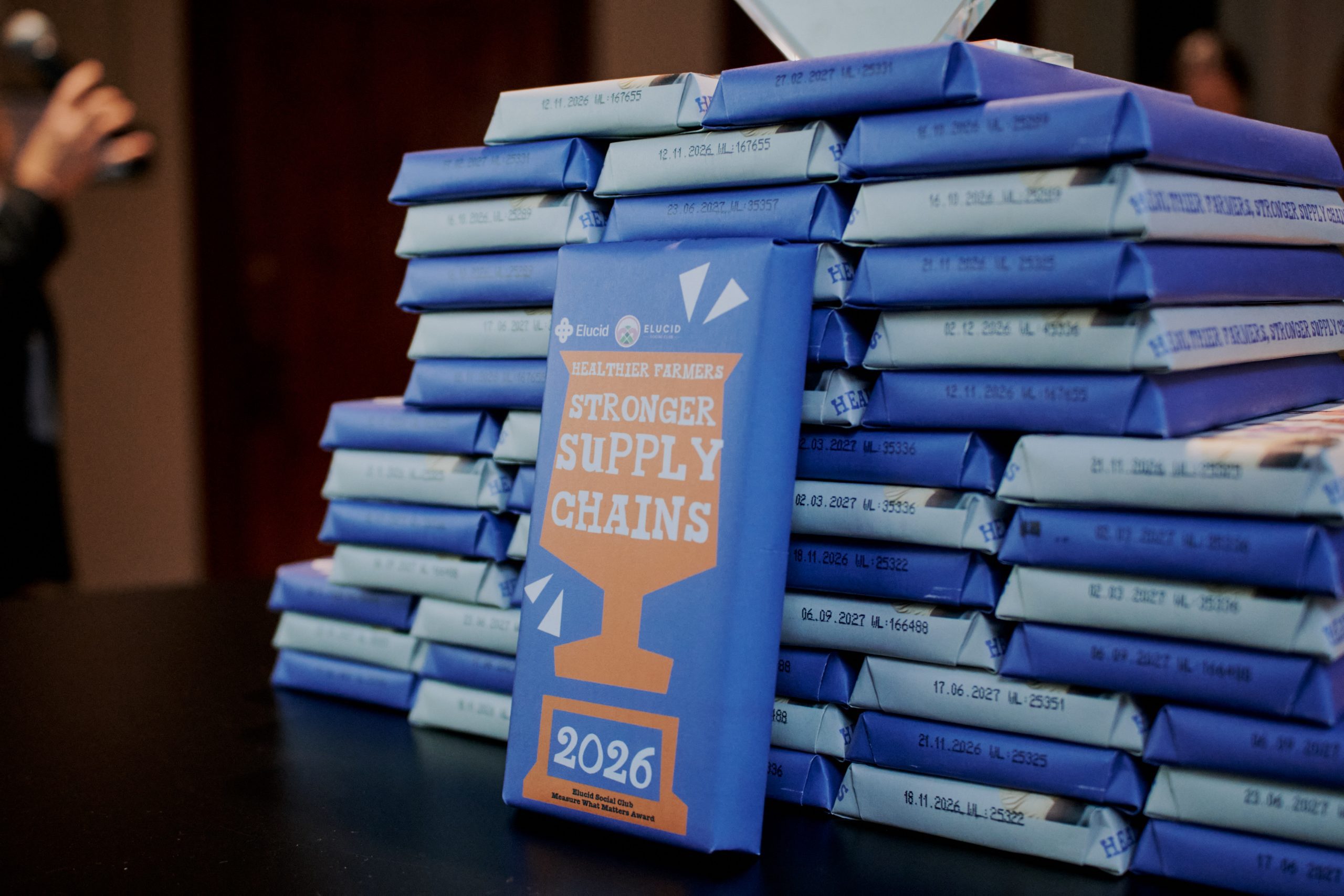
The “Spritz Impact Team”’s program was voted as the winner. They focused on three key indicators: (1) income diversification to increase income and health resilience, (2) local ownership being land or the project to increase local commitment and responsibility and (3) household dietary diversity (HDD), looking at the nutrition of the household. Their solution emphasized the evening’s themes of understanding who indicators serve, and how they can be transformed into impact.

Looking Ahead
The third Elucid Social Club underscored something simple yet urgent: Resilient supply chains cannot be built on incomplete definitions of impact.
By bringing together diverse voices and perspectives, the event highlighted the need for measurement systems that are not only standardized and comparable but also deeply connected to the lived experiences of those within supply chains.
The task ahead is not to measure more. It is to measure differently. To ensure that what we define as impact truly strengthens the people who make cocoa possible.
Because the future of cocoa will not be secured by data alone but by the health, stability, and resilience of the farmers at its foundation.
If this article sparked reflection – whether in agreement or disagreement – share your view on LinkedIn and tag @Elucid, or reach out to us at comms@elucid.de !
See you at the next Elucid Social Club event!




Related content
-
 At this year’s World Health Summit, the panel “Private Investments in Public Good for Global Health: How Do We Combine Forces in an Equitable Way, Building Partnerships to Address Funding Gaps and Improve Health
-
 We have been working toward making health a more prominent topic within supply chains since we were founded in 2022. This year, we're one step closer to our goals - we will be hosting
-
 Last month, we hosted our second gathering of the Elucid Social Club at the ViCAFE Roastery in Zurich, in collaboration with our investor and board member